Accéder au contenu principal
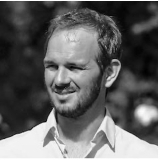
Julien CLAVEL
Clavel Julien
+33 (0)4 72 44 84 24 julien.clavel@univ-lyon1.fr
Université Claude Bernard Lyon 1 Bât. Forel - 6, rue Raphaël Dubois 69622 Villeurbanne - France
P3E
Chargé de Recherche CNRS

Je suis un biologiste de l’évolution dont les recherches visent, dans leur ensemble, à comprendre les processus qui ont généré, maintenu, et ultimement éliminé la diversité biologique au cours du temps. Pour cela, j’utilise et développe des approches analytiques, quantitatives et comparatives [en particulier les méthodes comparatives phylogénétiques], pour mieux comprendre les conséquences sur l’évolution de la diversité taxinomique et phénotypique des interactions entre espèces, ainsi que leurs interactions avec leurs environnements. Cette approche modélisatrice, associée à l’utilisation de données sur des organismes actuels et fossiles, me permet d’appréhender de manière unique les dynamiques évolutives sur des échelles de temps et d’espaces souvent inaccessibles par une approche expérimentale.


Responsabilités :
2025 - Membre du comité de la section 31 du CNRS
2021 / 2024 - Editeur Associé pour la revue 'Evolution'

Parcours académique :
2020 - CNRS Researcher
2018 / 2020 - Postdoctoral fellow (The Natural History Museum - London)
2014 / 2018 - Postdoctoral researcher (École Normale Supérieure - Paris)
2014 - PhD (University Claude Bernard Lyon 1 - Lyon)

Développement :
- mvMORPH “Multivariate comparative tools for fitting evolutionary models to morphometric data” (Auteur et créateur)
- RPANDA “Phylogenetic ANalysis of DiversificAtion. Implements macroevolutionary analyses on phylogenetic trees” (Auteur).
- glassoFast “glassoFast: a Fast Graphical LASSO” (Contributeur et mainteneur)

Mots-clés : biodiversité, macroévolution, paléobiologie, modélisation, phylogénétique, statistiques


I am an evolutionary biologist whose research aims to understand the processes that generated, maintained, and ultimately eliminated biological diversity over time. To this end, I use and develop analytical, quantitative, and comparative approaches [in particular, phylogenetic comparative methods] to better understand the consequences of interactions between species, as well as their interactions with their environments, on the evolution of taxonomic and phenotypic diversity. This modeling approach, combined with the use of data on extant and fossil organisms, allows me to better understand evolutionary dynamics on time and space scales that are often inaccessible through an experimental approach.

Responsibilities:
2025 - Member of the committee of the French National Center for Scientific Research (CNRS) - section 31 (evolutionary ecology and biology)
2021 / 2024 - Associate Editor for 'Evolution'

Academic:
2020 - CNRS Researcher
2018 / 2020 - Postdoctoral fellow (The Natural History Museum - London)
2014 / 2018 - Postdoctoral researcher (École Normale Supérieure - Paris)
2014 - PhD (University Claude Bernard Lyon 1 - Lyon)

Software development:
- mvMORPH “Multivariate comparative tools for fitting evolutionary models to morphometric data” (Author and creator)
- RPANDA “Phylogenetic ANalysis of DiversificAtion. Implements macroevolutionary analyses on phylogenetic trees” (Author).
- glassoFast “glassoFast: a Fast Graphical LASSO” (Contributor and maintainer)

Key-words: biodiversity, macroevolution, paleobiology, comparative phylogenetics, statistics

Cette galerie est actuellement vide.

31 publication(s) affichée(s)

2026

  • Morgane Fournier, Vivien Louppe, Isabelle Toussaint-Lardé, Clara Pierson, Narimane Chatar, Z Jack Tseng, Gabriel Ferreira, Christina Kyriakouli, Morgane Taillades, Lauriane Poloni, Julien Clavel, Anne-Claire Fabre

    Synopsis Facultative paedomorphosis refers to the ability of individuals within a species to reach sexual maturity either by undergoing metamorphosis (metamorph) or by retaining larval traits into adulthood (paedomorph). This developmental flexibility provides a natural framework to investigate how …

  • Morgane Fournier, Vivien Louppe, Isabelle Toussaint-Lardé, Clara Pierson, Narimane Chatar, Z. Jack Tseng, Gabriel Ferreira, Christina Kyriakouli, Morgane Taillades, Lauriane Poloni, Julien Clavel, Anne-Claire Fabre

    Facultative paedomorphosis refers to the ability of individuals within a species to reach sexual maturity either by undergoing metamorphosis (metamorph) or by retaining larval traits into adulthood (paedomorph). This developmental flexibility provides a natural framework to investigate how facultati…

  • Paola Montoya, Anne-Claire Fabre, Anjali Goswami, Hélène Morlon, Julien Clavel

    Abstract Multivariate phylogenetic comparative methods for modeling high-dimensional traits such as 3D shapes or gene expression profiles have been recently developed. However, these approaches are impractical and almost impossible to use when the number of traits exceeds a few thousands, as they be…

2025

  • Vivien Louppe, Kevin Le Verger, Julien Clavel, Gabriel Ferreira, Christina Kyriakouli, Edward Stanley, Emily Watt, Carla Bardua, Celeste Pérez-Ben, Nadia Fröbisch, Vivien Bothe, Renaud Boistel, Gheylen Daghfous, Anjali Goswami, Anne‐claire Fabre

    Metamorphosis, a common and spectacular developmental process, involves major phenotypic changes often linked to environmental transitions. Understanding how these changes affect morphological evolution is crucial for examining metamorphosis's evolutionary impacts. In this study, we analysed the rol…

  • Anjali Goswami, Julien Clavel

    Abstract Organismal morphology was at the core of study of biodiversity for millennia before the formalization of the concept of evolution. In the early to mid-twentieth century, a strong theoretical framework was developed for understanding both pattern and process of morphological evolution, and t…

  • Fabien Lafuma, Élodie Renvoisé, Julien Clavel, Ian J Corfe, Gilles Escarguel

    Morphological change occurs over macroevolutionary timescales under the action of natural selection and genetic drift combined with developmental processes shaping organogenesis. Although determining their relative weight is made difficult by discrepancies between paleontological and neontological d…

  • Isabelle Toussaint-Lardé, Vivien Louppe, Morgane Fournier, Julien Clavel, Anthony Herrel, Anne‐claire Fabre

    In animal behavior, standardizing experimental protocols ensures a rigorous interpretation of the results. However, when working with multisource data, homogeneous standardization is often difficult to attain. This is the case for many studies on feeding kinematics where experimental protocols are c…

  • Fernando Melendez-Vazquez, Alexander Lucaci, Avery Selberg, Julien Clavel, Melissa Rincon-Sandoval, Aintzane Santaquiteria, William White, Danielle Drabeck, Giorgio Carnevale, Emanuell Duarte-Ribeiro, Masaki Miya, Mark Westneat, Carole Baldwin, Lily Hughes, Guillermo Ortí, Sergei Kosakovsky Pond, Ricardo Betancur-R, Dahiana Arcila

    Endothermy has independently evolved in several vertebrate lineages but remains rare among fishes. Using an integrated approach combining phylogenomic and ecomorphological data for 1051 ray-finned fishes, a time-dependent evolutionary model, and comparative genomic analyses of 205 marine vertebrates…

2024

  • Jonathan P Drury, Julien Clavel, Joseph A Tobias, Jonathan Rolland, Catherine Sheard, Hélène Morlon

    According to classic models of lineage diversification and adaptive radiation, phenotypic evolution should accelerate in the context of ecological opportunity and slow down when niches become saturated.1,2 However, only weak support for these ideas has been found in nature, perhaps because most anal…

2023

  • Anjali Goswami, Eve Noirault, Ellen Coombs, Julien Clavel, Anne-Claire Fabre, Thomas Halliday, Morgan Churchill, Abigail Curtis, Akinobu Watanabe, Nancy Simmons, Brian Beatty, Jonathan Geisler, David Fox, Ryan Felice

    The placental skull has evolved into myriad forms, from longirostrine whales to globular primates, and with a diverse array of appendages from antlers to tusks. This disparity has recently been studied from the perspective of the whole skull, but the skull is composed of numerous elements that have …

  • Katja Heuer, Nicolas Traut, Alexandra A de Sousa, Sofie Valk, Julien Clavel, Roberto Toro

    The process of brain folding is thought to play an important role in the development and organisation of the cerebrum and the cerebellum. The study of cerebellar folding is challenging due to the small size and abundance of its folia. In consequence, little is known about its anatomical diversity an…

  • Priscila Rothier, Anne-Claire Fabre, Julien Clavel, Roger Bj Benson, Anthony Herrel

    Vertebrate limb morphology often reflects the environment due to variation in locomotor requirements. However, proximal and distal limb segments may evolve differently from one another, reflecting an anatomical gradient of functional specialization that has been suggested to be impacted by the timin…

2022

  • Anjali Goswami, Eve Noirault, Ellen Coombs, Julien Clavel, Anne-Claire Fabre, Thomas Halliday, Morgan Churchill, Abigail Curtis, Akinobu Watanabe, Nancy Simmons, Brian Beatty, Jonathan Geisler, David Fox, Ryan Felice

    The Cenozoic diversification of placental mammals is the archetypal adaptive radiation. Yet, discrepancies between molecular divergence estimates and the fossil record fuel ongoing debate around the timing, tempo, and drivers of this radiation. Analysis of a three-dimensional skull dataset for livin…

  • Ellen J. Coombs, Ryan N. Felice, Julien Clavel, Travis Park, Rebecca Bennion, Morgan Churchill, Jonathan H. Geisler, Brian Beatty, Anjali Goswami

    The evolution of cetaceans (whales and dolphins) represents one of the most extreme adaptive transitions known, from terrestrial mammals to a highly specialized aquatic radiation that includes the largest animals alive today. Many anatomical shifts in this transition involve the feeding, respiratory…

  • Guillem Orlandi-Oliveras, Meike Köhler, Julien Clavel, Robert Scott, Serdar Mayda, Tanju Kaya, Gildas Merceron

    The adaptive radiation of hipparionins after their Old World dispersal was linked with a trend towards smaller body sizes. The appearance of the small-sized forms has usually been associated to open environments and grazing diets. A recent approach, moreover, highlights the role of life history modi…

  • Emily Troyer, Ricardo Betancur-R, Lily Hughes, Mark Westneat, Giorgio Carnevale, William White, John Pogonoski, James Tyler, Carole Baldwin, Guillermo Ortí, Andrew Brinkworth, Julien Clavel, Dahiana Arcila

    Body size is an important species trait, correlating with life span, fecundity, and other ecological factors. Over Earth’s geological history, climate shifts have occurred, potentially shaping body size evolution in many clades. General rules attempting to summarize body size evolution include Bergm…

2021

  • Fabien Lafuma, Ian J Corfe, Julien Clavel, Nicolas Di-Poï

    Teeth act as tools for acquiring and processing food, thus holding a prominent role in vertebrate evolution. In mammals, dental-dietary adaptations rely on tooth complexity variations controlled by cusp number and pattern. Complexity increase through cusp addition has dominated the diversification o…

  • Carla Bardua, Anne-Claire Fabre, Julien Clavel, Margot Bon, Kalpana Das, Edward L Stanley, David C Blackburn, Anjali Goswami

    Habitat is one of the most important factors shaping organismal morphology, but it may vary across life history stages. Ontogenetic shifts in ecology may introduce antagonistic selection that constrains adult phenotype, particularly with ecologically distinct developmental phases such as the free-li…

  • Jonathan P Drury, Julien Clavel, Joseph A Tobias, Jonathan Rolland, Catherine Sheard, Hélène Morlon

    The latitudinal diversity gradient is one of the most striking patterns in nature, yet its implications for morphological evolution are poorly understood. In particular, it has been proposed that an increased intensity of species interactions in tropical biota may either promote or constrain trait e…

2020

  • Maxime Garcia, Frédéric Theunissen, Frédéric Sèbe, Julien Clavel, Andrea Ravignani, Thibaut Marin-Cudraz, Jérôme Fuchs, Nicolas Mathevon

    Communicating species identity is a key component of many animal signals. However, whether selection for species recognition systematically increases signal diversity during clade radiation remains debated. Here we show that in woodpecker drumming, a rhythmic signal used during mating and territoria…

  • Julien Clavel, Hélène Morlon

    Understanding what shapes species phenotypes over macroevolutionary timescales from comparative data often requires studying the relationship between phenotypes and putative explanatory factors or testing for differences in phenotypes across species groups. In phyllostomid bats for example, is mandi…

  • Heather White, Julien Clavel, Abigail Tucker, Anjali Goswami

    Cranial sutures play critical roles in facilitating postnatal skull development and function. The diversity of function is reflected in the highly variable suture morphology and complexity. Suture complexity has seldom been studied, resulting in little consensus on the most appropriate approach for …

  • Quentin Martinez, Julien Clavel, Jacob A Esselstyn, Anang S Achmadi, Camille Grohé, Nelly Pirot, Pierre-Henri Fabre

    Olfaction and thermoregulation are key functions for mammals. The former is critical to feeding, mating, and predator avoidance behaviors, while the latter is essential for homeothermy. Aquatic and amphibious mammals face olfactory and thermoregulatory challenges not generally encountered by terrest…

  • Ellen Coombs, Julien Clavel, Travis Park, Morgan Churchill, Anjali Goswami

    Background: Unlike most mammals, toothed whale (Odontoceti) skulls lack symmetry in the nasal and facial (nasofacial) region. This asymmetry is hypothesised to relate to echolocation, which may have evolved in the earliest diverging odontocetes. Early cetaceans (whales, dolphins, and porpoises) such…

  • Anne-Claire Fabre, Carla Bardua, Margot Bon, Julien Clavel, Ryan Felice, Jeffrey Streicher, Jeanne Bonnel, Edward Stanley, David Blackburn, Anjali Goswami

    Metamorphosis is widespread across the animal kingdom and induces fundamental changes in the morphology, habitat and resources used by an organism during its lifetime. Metamorphic species are likely to experience more dynamic selective pres- sures through ontogeny compared with species with single-p…

2019

2018

2016

2015

  • Hélène Morlon, Eric Lewitus, Fabien L. Condamine, Julien Clavel, Jonathan P Drury

    A number of approaches for studying macroevolution using phylogenetic trees have been developed in the last few years. Here, we present RPANDA, an R package that implements model‐free and model‐based phylogenetic comparative methods for macroevolutionary analyses. The model‐free approaches implement…

  • Julien Clavel, Gilles Escarguel, Gildas Merceron

    We present mvmorph, a package of multivariate phylogenetic comparative methods for the r statistical environment. mvmorph is freely available on the cran package repository (http://cran.r-project.org/web/packages/mvMORPH/). mvmorph allows fitting a range of multivariate evolutionary models under a m…

2014

  • Julien Clavel, Gildas Merceron, Gilles Escarguel

    Fossil-based estimates of diversity and evolutionary dynamics mainly rely on the study of morphological variation. Unfortunately, organism remains are often altered by post-mortem taphonomic processes such as weathering or distortion. Such a loss of information often prevents quantitative multivaria…

Cet utilisateur n'a actuellement aucun blog.