
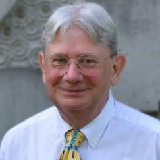
UMR CNRS 5023 LEHNA Université Claude Bernard Lyon 1 3 rue Raphaël Dubois - Bât. Forel F-69622 VILLEURBANNE Cedex - FRANCE
Responsable technique de la plateforme d'Ecologie isotopique
Animateur du pôle Analyses Physico-chimiques
Membre élu du conseil d'UMR
Après une première carrière effectuée dans le privé, j'ai rejoint le CNRS en 2004 pour développer de nouvelles méthodes d’analyse des isotopes, contribuant à des avancées majeures en géochimie et en écologie. Je collabore avec des archéologues, des paléontologues ou encore des climatologues pour mieux comprendre les interactions passées entre milieux et sociétés, éclairant ainsi l’origine des molécules dans les environnements naturels. Lauréat de la médaille de cristal 2025 du CNRS.
Géochimiste de formation, je suis spécialiste des isotopes stables et de leur analyse par spectrométrie de masse. Avant de rejoindre le CNRS en 2004, j'ai évolué dans le secteur de l’industrie pendant 15 ans, en dirigeant notamment le département "Isotopes stables" du fabricant d’instruments Micromass (aujourd’hui Elementar). Ce parcours atypique a permis notamment la mise au point de nouveaux traceurs géochimiques des milieux de vie des vertébrés, à partir du soufre et de l’oxygène. Portrait:
The 3 lives of an isotopist: student, manufacturer, user - Dr. François Fourel, Université Claude Bernard Lyon


Présentation François Fourel
100 publication(s) affichée(s)
2026
- Marie Larrieu, Ilham Bentaleb, Sébastien Gasc, Magali Toriti, Benoît Marie, François Fourel, Sandrine Canal, Leïa Mion, Phillipe Sénac, Jordi Gibert Rebull, Christophe Vaschalde, Jérôme Ros
Given the difficulty of documenting the reality of landscape use practices in al-Andalus, interdisciplinary analyses are essential. The site of Las Sillas, a Muslim rural settlement occupied between the 10th and 11th centuries in the Flumen valley (Aragon, Spain), is a perfect example of this, thank…
2025
- Eve Poulallion, Violeta Killian Galván, Verónica Seldes, María Fernanda Zigarán, Gabriela Recagno Browning, Pablo Mignone, François Fourel, Pascale Richardin, Bruno Maureille, Christophe Lécuyer
- Paul Dufour, Kevin J Kardynal, Keith A Hobson, David Monticelli, Yann Kolbeinsson, Peter Alfrey, Dušan Kerestúr, Thijs Valkenburg, François Fourel, Frédéric Jiguet
Understanding the occurrence of vagrant individuals away from their usual distribution range can shed light on animal navigation systems. In autumn, migratory Nearctic landbirds often occur as far as Western Europe, and while the link between these occurrences and wind conditions over the Atlantic O…
- Jean Goedert, David Broussard, Jeffrey Trop, Edward Daeschler, Romain Amiot, François Fourel, Sébastien Olive, Arnauld Vinçon-Laugier, Christophe Lécuyer
Late Devonian aquatic environments hosted the fin-to-limb transition in vertebrates. Upper Devonian (ca. 365−360 Ma) strata in Pennsylvania, USA, preserve a diversity of fishes and tetrapods in coastal marine to fluvial depositional environments, making this region ideal for investigating the ecolog…
- Ana-Voica Bojar, Christophe Lécuyer, Hans-Peter Bojar, François Fourel, Stanislaw Chmiel
The summer of 2019 is particularly well known for the famous heatwaves that swept across the European continent, with its associated drought and record-breaking air temperatures. This was followed by powerful thunderstorms, characterised by hail and heavy rain that damaged the crops on a regional sc…
- Anaïs Duhamel, Aurore Canoville, Arnaud Vinçon-Laugier, Julien Joseph, François Fourel, Christophe Lécuyer, Romain Amiot, Antoine Louchart
Abstract Bird seasonal migration is a remarkable biogeographic phenomenon, yet its deep‐time origin(s) and evolutionary history remain poorly understood, with the bird fossil record largely overlooked. This study explores the predictability of bird migratory behaviour from the oxygen isotope composi…
2024
- Hsan Ben Jamaa, Said Nouira, François Fourel, Ilham Bentaleb
This research employed stable isotope analysis to investigate the migratory patterns and geographic origins of Eleonora's falcon (Falco eleonorae) and its associated prey species within the Galite Archipelago of Tunisia. Feathers collected from both juvenile and adult falcons along with their prey w…
- Jérôme Ros, Fatima-Ezzahra Badri, Amandine Cartier, Benoit Marie, Abdallah Fili, Chloé Capel, Leïa Mion, Sandrine Canal, François Fourel, Violaine Heritier-Salama, Laurent Bouby, Ilham Bentaleb
Over the last millennium, the town of Aghmat (Morocco) has undergone major socio-economic changes, raising the question of how these transformations have affected the development of agricultural systems and exploited landscapes over time. This preliminary pilot study brings together for the first ti…
- Regional heterothermies recorded in the oxygen isotope composition of harbour seal skeletal elementsNicolas Séon, Romain Amiot, Guillaume Suan, Christophe Lécuyer, François Fourel, Arnauld Vinçon-Laugier, Sylvain Charbonnier, Peggy Vincent
Regional heterothermy is a strategy used by marine mammals to maintain a high and stable core body temperature, but its identification needs in situ measurements difficult to set up in extant wild organisms and inapplicable to extinct ones. We have analysed the oxygen isotope composition of bioapati…
- Eve Poulallion, Violeta Galván, Verónica Seldes, María Fernanda Zigarán, Gabriela Recagno Browning, François Fourel, Thibault Clauzel, Jean-Pierre Flandrois, Nicolas Séon, Laurent Simon, Romain Amiot, Christophe Lécuyer
- Sabrina Renaud, Emilie Hardouin, Eleftherios Hadjisterkotis, George Mitsainas, Maï Bergmann, Eloïse François, François Fourel, Laurent Simon
Two cryptic species of mice coexist on Cyprus: the introduced house mouse and the endemic Cypriot mouse, that remained unnoticed until the beginning of the 21 st century. Their trophic position was investigated using isotopic ecology. The shape and biomechanics of the mandible provided a complementa…
2023
- Ana-Voica Bojar, Christophe Lecuyer, William Maher, Hans-Peter Bojar, François Fourel, Ştefan Vasile
Deep-sea hydrothermal vent communities, revealing patterns of niche partitioning, live in a limited area characterised by sharp physico-chemical gradients. In this study, we investigated carbon, sulfur, nitrogen stable isotopes as well as arsenic (As) speciations and concentrations for two snails (A…
- Nicolas Séon, Isabelle Brasseur, Christopher Scala, Théo Tacail, Sidonie Catteau, François Fourel, Peggy Vincent, Christophe Lécuyer, Guillaume Suan, Sylvain Charbonnier, Arnauld Vinçon-Laugier, Romain Amiot
The secondary adaptation of Cetacea to a fully marine lifestyle raises the question of their ability to maintain their water balance in a hyperosmotic environment. Cetacea have access to four potential sources of water: surrounding salt oceanic water, dietary free water, metabolic water and inhaled …
- Nagham Tabaja, David Amouroux, Lamis Chalak, François Fourel, Emmanuel Tessier, Ihab Jomaa, Milad El Riachy, Ilham Bentaleb
This study investigates the seasonality of the mer- cury (Hg) concentration of olive tree foliage, an iconic tree of the Mediterranean basin. Hg concentrations of foliage, stems, soil surface, and litter were analyzed on a monthly ba- sis in ancient olive trees growing in two groves in Lebanon, Bcha…
- Jules Chiffard, Ilham Bentaleb, Nigel Yoccoz, François Fourel, Elodie Blanquet, Aurélien Besnard
Large mammalian herbivores (LMH) shape vertebrate communities and structure food webs in many terrestrial ecosystems. However, the mechanisms that underlie the effects of LMH on other vertebrates are poorly understood. In France, domestic LMH have grazed alpine and mountain grasslands for thousands …
- Thibault Clauzel, Pascale Richardin, Jannick Ricard, Gilles Prilaux, Jeremy E. Martin, Romain Amiot, François Fourel, Anh Nguyen Van, Florent Arnaud-Godet, Arnauld Vinçon-Laugier, Jean‐pierre Flandrois, Christophe Lécuyer
- Lucie Pinasseau, Florian Mermillod-Blondin, Aurélie Fildier, François Fourel, Félix Vallier, Ludovic Guillard, Laure Wiest, Laurence Volatier
Knowledge about groundwater origins and their interactions with surface water is fundamental to assess their vulner- ability. In this context, hydrochemical and isotopic tracers are useful tools to investigate water origins and mixing. More recent studies examined the relevance of contaminants of em…
- Jean Goedert, Romain Amiot, Jérémy Anquetin, Nicolas Séon, Renaud Bourgeais, Gilles Bailly, François Fourel, Laurent Simon, Chun Li, Wei Wang, Christophe Lécuyer
After decades of debate on the origin of turtles, it is now widely accepted that they are diapsid reptiles originating in the Permian from a terrestrial ancestor. It seems that the initial development of the structures that will later form the unique turtle bony shell took place as a response to a f…
- Christophe Lécuyer, François Atrops, François Fourel, Thibault Clauzel, Jean-Pierre Flandrois
Located in the French Southern Alps, the Cerveyrette area is a watershed of about 100 km2 including a torrent and a high-altitude swampy plain dominated by a nival regime. The apparent cyclicity of very small magnitude in the δ18O (−14.4 ± 0.6 ‰) of the river waters is interpreted to partly reflect …
- Romain Amiot, Lina B Golovneva, Pascal Godefroit, Jean Goedert, Géraldine Garcia, Christophe Lécuyer, François Fourel, Alexei B Herman, Robert A Spicer
Dinosaur eggshell fragments attributed to the oofamilies Spheroolithidae and Prismatoolithidae and recovered from the latest Cretaceous Kakanaut Formation of North-eastern Russia (Chukotka) constitute one of the northernmost records of dinosaur reproductive behaviors. The high palaeolatitude of the …
- Kévin Rey, Romain Amiot, François Fourel, Julie Luyt, Frédéric Fluteau, Christophe Lécuyer
The Beaufort Group of the Main Karoo Basin of South Africa provides an uninterrupted record of fluvio-lacustrine sedimentation from the Middle Permian to the Middle Triassic and covers an area of approximately 200,000 km2, about 20% of the country's surface area. A diverse range of vertebrate taxa i…
- Yohan Pochat-Cottilloux, Jeremy E Martin, Mathieu G Faure-Brac, Stéphane Jouve, Christian de Muizon, Jorge Cubo, Christophe Lécuyer, François Fourel, Romain Amiot
Sebecids constitute a family of notosuchian crocodylomorphs of probable terrestrial habits. They are notable for having survived the Cretaceous-Paleogene mass extinction and are known until the Miocene in South America. However, ecological traits that favoured their resilience in continental ecosyst…
- Vincent Luccisano, Gilles Cuny, Alan Pradel, François Fourel, Christophe Lécuyer, Jean-Marc Pouillon, Kathleen Lachat, Romain Amiot
The palaeoecology of the Xenacanthiformes (Chondrichthyes) is still a matter of discussion. Historically considered as freshwater organisms, hypotheses of euryhaline ecology including migratory behaviour were recently proposed based on the histology of their dorsal spines. However, recent studies st…
- Laurent Deschodt, David Hérisson, Pierre Antoine, Jean‑luc Locht, Agnès Gauthier, Nicole Limondin-Lozouet, Patrick Auguste, Jean-Jacques Bahain, Bassam Ghaleb, Chloé Maréchal, Luc Vallin, Loïc Lebreton, Benjamin Audiard, Guillaume Hulin, Guillaume Jamet, Qingfeng Shao, Christophe Falguères, Christophe Lécuyer, Romain Amiot, Francois Fourel, Emmanuelle Stoetzel, Salvador Bailon, Bertrand Masson, Sylvie Coutard, Noémie Sévêque, Sophie Louguet, Yann Petite, Clément Virmoux
La Formation de Waziers est constituée d’un dépôt alluvial limoneux surmonté de tuf calcaire et de tourbe. Elle est conservée dans un petit paléo-chenal de la rivière Scarpe-Scarbus, reconnu sur plusieurs centaines de mètres de long à l’entrée de la plaine de la Scarpe et daté de la fin du Saalien (…
2022
- Nicolas Séon, Romain Amiot, Guillaume Suan, Christophe Lécuyer, François Fourel, Fabien Demaret, Arnauld Vinçon-Laugier, Sylvain Charbonnier, Peggy Vincent
Abstract. Strategies used by marine vertebrates to regulate their body temperature can result in local variations, and the knowledge of these regional heterothermies is crucial for better understanding the thermophysiologies of extant and extinct organisms. In order to investigate regional heterothe…
- Ada Ndiaye, Ilham Bentaleb, Charly Favier, François Fourel, David Sebag, Mamadou Fall, Pierre Giresse, Bachir Diouf
A core from a peat bog in the “Niayes” region, northwest of Senegal, provides a valuable insight into the evolution of the landscape and fire regime related to the West African Monsoon rainfall and to human impact over the Holocene. The high-resolution multiproxy approach based on stable carbon isot…
- Thibault Clauzel, Pascale Richardin, Jannick Ricard, Yves Le Béchennec, Romain Amiot, François Fourel, Diana Joseph, Arnauld Vinçon-Laugier, Jean-Pierre Flandrois, Christophe Lécuyer
Stable hydrogen isotope measurement of body tissues faces analytical and interpretative challenges such as hydrogen exchange with atmosphere or competitive influence of drinking water and food intake. Samples from the Gallic site of The ` zy-Glimont, France, have already been investigated isotopical…
- Chloé Maréchal, Christophe Lécuyer, Romain Amiot, François Fourel, Pierre Antoine, P. Auguste, Laurent Deschodt, David Hérisson
La dernière période interglaciaire (Last Interglacial, LIG, ou Stade Isotopique Marin 5.5, SIM 5.5), comprise entre ≈129 et ≈116 milliers d'années avant aujourd'hui (ci-dessous ka), est peu documentée, en particulier en domaine continental en raison de la rareté des dépôts attribuables à cette pério…
- Thibault Clauzel, Pascale Richardin, Jannick Ricard, Yves Le Béchennec, Romain Amiot, François Fourel, Brian Phouybanhdyt, Diana Joseph, Arnauld Vinçon-Laugier, Jean-Pierre Flandrois, Christophe Lécuyer
2021
- Aurélien Cuchet, Anthony Anchisi, Philippe Telouk, Yijiao Yao, Frédéric Schiets, François Fourel, Yohann Clément, Pierre Lantéri, Elise Carénini, Patrick Jame, Hervé Casabianca
- Christophe Lécuyer, Jean Goedert, Johanne Klee, Thibault Clauzel, Pascale Richardin, François Fourel, Teresa Delgado-Darias, Verónica Alberto-Barroso, Javier Velasco-Vázquez, Juan Francisco Betancort, Romain Amiot, Chloé Maréchal, Jean-Pierre Flandrois
The hard and soft tissue remains of a pre-Hispanic population of the Gran Canaria Island at six different archaeological localities were studied using C-14 dating and stable isotope compositions. Radiocarbon dating indicates island occupation ranging from the beginning of the 7th to the mid-14th cen…
- Romain Amiot, Nao Kusuhashi, Haruo Saegusa, Masateru Shibata, Naoki Ikegami, Shizuo Shimojima, Teppei Sonoda, François Fourel, Tadahiro Ikeda, Christophe Lécuyer, Marc Philippe, Xu Wang
We investigated the environmental conditions that prevailed in continental ecosystems recorded in sedimentary deposits of Japan during the Cretaceous through the analysis of oxygen and carbon isotope compositions of phosphate (δ 18 O p) and apatite-bound carbonate (δ 18 O c and δ 13 C c) of vertebra…
2020
- Jean Goedert, Romain Amiot, Didier Berthet, François Fourel, Laurent Simon, Christophe Lécuyer
Reconstructing the living environment of extinct vertebrates is often challenging due to the lack of proxies. We propose a new proxy to the living environment based on the combined oxygen and sulphur stable isotope analysis of vertebrate hydroxyapatite. We tested this isotopic proxy to 64 biogenic a…
- Kévin Rey, Michael Day, Romain Amiot, François Fourel, Julie Luyt, Christophe Lécuyer, Bruce Rubidge
Please cite this article as: K. Rey, M.O. Day, R. Amiot, et al., Stable isotopes (δ18O and δ13C) give new perspective on the ecology and diet of Endothiodon bathystoma (Therapsida, Dicynodontia) from the late Permian of the South African Karoo Basin, Palaeogeography, Palaeoclimatology, Palaeoecology…
- Thibault Clauzel, Pascale Richardin, Jannick Ricard, Yves Le Béchennec, Romain Amiot, François Fourel, Brian Phouybanhdyt, Arnauld Vinçon-Laugier, Jean-Pierre Flandrois, Christophe Lécuyer
The Roman Warm Period (from ≈300 BCE to ≈300 CE) is a climatic optimum, which had a key role in the development of the Roman civilization. This study provides new Mean Air Temperatures (MATs) inferred from the oxygen isotope composition of 80 bones and teeth apatite from 8 humans and 8 animals of th…
- Christophe Lécuyer, Antonio Sanchez Marco, Alejandro Lomoschitz, Juan-Francisco Betancort, François Fourel, Romain Amiot, Thibault Clauzel, Jean-Pierre Flandrois, Joaquín Meco
Fossiliferous bioclastic calcarenites of fluvial-aeolian origin were deposited between 4.3 ± 0.7 Ma and 3.78 ± 0.71 Ma in Lanzarote, Canary Archipelago. Climate was characterized by warm and steppic conditions. The fossil assemblage contains land snail shells that recrystallized into calcite as reve…
- Chloé Maréchal, Antoine Boutier, Marie-Antoinette Mélières, Thibault Clauzel, Juan Francisco Betancort, Alejandro Lomoschitz, Joaquin Meco, François Fourel, Abel Barral, Romain Amiot, Christophe Lécuyer
The Canary Islands, east of the North Atlantic Ocean (27°N-29°N), are under the influence of the Canary Current, the descending branch of the North Atlantic Gyre, which is modulated by coastal upwelling off NorthWest Africa. They constitute strategic sites for palaeoclimatic reconstructions, especia…
- Ana-Voica Bojar, Christophe Lécuyer, Octavian Duliu, Hans-Peter Bojar, François Fourel
For the first time, we present a decadal-scale stable isotope record (δ 18 O, δ 13 C) of 67 speleothem calcite samples coming from an artificial tunnel network located in Graz, Austria. Stable isotope data are interpreted with the help of time series (TS) analysis of mean air temperatures (MAT) and …
- Nicolas Séon, Romain Amiot, Jérémy Martin, Mark Young, Heather Middleton, François Fourel, Laurent Picot, Xavier Valentin, Christophe Lécuyer
One contribution of 15 to a theme issue 'Vertebrate palaeophysiology'. Teleosauridae and Metriorhynchidae were thalattosuchian crocodylomorph clades that secondarily adapted to marine life and coexisted during the Middle to Late Jurassic. While teleosaurid diversity collapsed at the end of the Juras…
- François Fourel, Christophe Lécuyer, Patrick Jame, Alexandre Guironnet, Antoine Boutier, Manon Barbier, Nigel Blamey, Uwe Brand, Philip Fralick
- Christophe Lécuyer, François Fourel, Nigel Blamey, Uwe Brand, Philip Fralick
δ2H were measured in water present in tiny primary fluid inclusions trapped in Mesoproterozoic (≈1.4 Ga) and Neoproterozoic (≈0.8 Ga) halite crystals. While the hydrogen concentrations range from 300 to 1500 ppm for the whole sample collection, δ2H values range from −74‰ to −54‰ (VSMOW) for the Meso…
- Aurélien Cuchet, Patrick Jame, Anthony Anchisi, François Fourel, Jean-Claude Lefèvre, Christine Oberlin, Elise Carénini, Hervé Casabianca
- Marie Linglin, Romain Amiot, Pascale Richardin, Stéphanie Porcier, Ingrid Antheaume, Didier Berthet, Vincent Grossi, François Fourel, Jean-Pierre Flandrois, Antoine Louchart, Jeremy E. Martin, Christophe Lécuyer
Millions of mummified birds serving for religious purpose have been discovered from archeological sites along the Nile Valley of Egypt, in majority ibises. Whether these birds were industrially raised or massively hunted is a matter of heavy debate as it would have a significant impact on the econom…
- Jing Cui, Emmanuelle Lamade, François Fourel, Guillaume Tcherkez
Nitrogen (N) assimilation is associated with 14N/15N fractionation such that plant tissues are generally 15N‐depleted compared to source nitrate. In addition to nitrate concentration, the δ15N value in plants is also influenced by isotopic heterogeneity amongst organs and metabolites. However, our c…
- Kévin Rey, Michael Day, Romain Amiot, François Fourel, Julie Luyt, Marc van den Brandt, Christophe Lécuyer, Bruce Rubidge
The Abrahamskraal Formation of South Africa has a diverse middle Permian (Guadalupian) fossil tetrapod fauna comprising largely basal therapsids and pareiasaurian parareptiles. Knowledge on the paleoecology of these animals is limited because inferences of many ecological traits in mid-Permian tetra…
- Thibault Clauzel, Chloé Maréchal, François Fourel, Abel Barral, Romain Amiot, Juan-Francisco Betancort, Alejandro Lomoschitz, Joaquín Meco, Christophe Lécuyer
The study of paleoclimates enables us to improve and better constrain climate models in order to forecast future climate variations. Marine Isotope Stage 11 (MIS11), which began around 425,000 yr BP and lasted about 65,000 yr, is a warm isotope stage of paramount importance, because the astronomical…
- Claudia Speciale, Ilham Bentaleb, Nathalie Combourieu-Nebout, Gian Pietro Di Sansebastiano, Filippo Iannì, François Fourel, Enrico Giannitrapani
Archaeological investigations carried out at Case Bastione (Enna, central Sicily) provide a key insight into the cultural and environmental changes that occurred during the transition from the Copper Age to the Bronze Age. Preliminary data of an ongoing paleoenvironmental reconstruction through arch…
2019
- A. Demény, A.D. Gugora, D. Kesjár, Christophe Lécuyer, François Fourel
In addition to the collagen and phosphate components of bones and teeth, the stable carbon and oxygen isotope compositions of skeletal carbonate are frequently measured to determine diet, environmental conditions, and populational or individual migration in bioarchaeological research. A standardized…
- François Fourel, Christophe Lécuyer, Magali Seris, Nigel Blamey, Uwe Brand, Philip Fralick, Filip Volders
We demonstrate an improved method based on continuous‐flow elemental analyser pyrolysis isotopic ratio mass spectrometry (CF‐EA‐PY‐IRMS) to measure the 2H/1H ratios of water trapped in halite crystals. Two challenges to overcome are the low hydrogen concentration of samples (10‐50 μmol H2·g−1) and t…
- Christophe Lécuyer, François Fourel, Magali Seris, Romain Amiot, Jean Goedert, Laurent Simon
The large range of stable oxygen isotope values of phosphate-bearing minerals and dissolved phosphate of inorganic or organic origin requires the availability of in-house produced calibrated silver phosphate of which isotopic ratios must closely bracket those of studied samples. We propose a simple …
- Frédéric Quillévéré, Nadège Nouailhat, Sébastien Joannin, Jean-Jacques Cornee, Pierre Moissette, Christophe Lécuyer, François Fourel, Konstantina Agiadi, Efterpi Koskeridou, Gilles Escarguel
Early Pleistocene (Calabrian) clays of the Lindos Bay Formation have been uplifted and are exposed today on the eastern coast of Rhodes (Hellenic forearc, Greece). The hemipelagic origin of these sediments and the excellent preservation of the microfossils they contain, make the Lindos Bay Formation…
- Mónica Fernández-García, Aurélien Royer, Juan Manuel López-García, Maria Bennàsar, Jean Goedert, François Fourel, Marie-Anne Julien, Sandra Bañuls-Cardona, Antonio Rodríguez-Hidalgo, Josep Vallverdú, Christophe Lécuyer
Small mammals, especially rodents, constitute valuable proxies for continental Quaternary environments at a regional and local scale. Recent studies have demonstrated the relation between the stable oxygen isotope composition of the biogenic phosphate from rodent teeth (δ18Op), and the oxygen isotop…
2018
- Ana-Voica Bojar, Christophe Lécuyer, Hans-Peter Bojar, François Fourel, Ştefan Vasile
- Charlotte Prud'Homme, Christophe Lécuyer, Pierre Antoine, Christine Hatté, Olivier Moine, François Fourel, Romain Amiot, Francois Martineau, Denis-Didier Rousseau
- James Mortimer, Christophe Lécuyer, François Fourel, James Carpenter
The study outlined in this article was carried out within the framework of ESA's PROSPECT programme, which will provide both a sample drill and miniaturised mass spectrometer system for flight on-board the planned Russian Luna-27 mission to the lunar south pole. There, it aims to collect samples of …
- Jean Goedert, Christophe Lécuyer, Romain Amiot, Florent Arnaud-Godet, Xu Wang, Linlin Cui, Gilles Cuny, Guillaume Douay, François Fourel, Gérard Panczer, Laurent Simon, J.-Sébastien Steyer, Min Zhu
The fish-to-tetrapod transition—followed later by terrestrialization—represented a major step in vertebrate evolution that gave rise to a successful clade that today contains more than 30,000 tetrapod species. The early tetrapod Ichthyostega was discovered in 1929 in the Devonian Old Red Sandstone s…
- Guillaume Suan, Iris Schollhorn, Jan Schlogl, Tomasz Segit, Emanuela Mattioli, Christophe Lécuyer, François Fourel
The Toarcian oceanic anoxic event (T-OAE; 183 Ma) was accompanied by severe biotic and geochemical perturbations that are considered as some of the most severe of the Mesozoic era. Nevertheless, paleoceanographic conditions during the T-OAE in the Tethyan domain remain poorly understood owing to the…
- Christophe Lécuyer, François Atrops, Romain Amiot, Delphine Angst, Valérie Daux, Jean-Pierre Flandrois, François Fourel, Kevin Rey, Aurélien Royer, Magali Seris, Alexandra Touzeau, Denis–didier Rousseau
2017
- Céline Martin, Bruno Maureille, Romain Amiot, Alexandra Touzeau, Aurélien Royer, François Fourel, Gérard Panczer, Jean-Pierre Flandrois, Christophe Lécuyer
The oxygen isotope compositions of bones (n = 11) and teeth (n = 20) from 12 Sudanese individuals buried on Sai Island (Nubia) were analysed to investigate the registration of the evolution of the Nile environment from 3700 to 500 years BP and the potential effects of ontogeny on the oxygen isotope …
- Abel Barral, Bernard Gomez, François Fourel, Véronique Daviero-Gomez, Christophe Lecuyer
CO2 is considered the main greenhouse gas involved in the current global warming and the primary driver of temperature throughout Earth's history. However, the soundness of this relationship across time scales and during different climate states of the Earth remains uncertain. Here we explore how CO…
- Romain Amiot, Delphine Angst, Serge Legendre, Eric Buffetaut, François Fourel, Jan Adolfssen, Aurore André, Ana Voica Bojar, Aurore Canoville, Abel Barral, Jean Goedert, Stanislaw Halas, Nao Kusuhashi, Ekaterina Pestchevitskaya, Kevin Rey, Aurélien Royer, Antônio Álamo Feitosa Saraiva, Bérengère Savary-Sismondini, Jean-Luc Siméon, Alexandra Touzeau, Zhonghe Zhou, Christophe Lécuyer
Oxygen isotope compositions of bone phos- phate (δ18Op) were measured in broiler chickens reared in 21 farms worldwide characterized by contrasted lati- tudes and local climates. These sedentary birds were raised during an approximately 3 to 4-month period, and local precipitation was the ultimate s…
- Aurélien Royer, Valérie Daux, François Fourel, Christophe Lécuyer
Objectives Stable isotope data provide insight into the reconstruction of ancient human diet. However, cooking may alter the original stable isotope compositions of food due to losses and modifications of biochemical and water components. Methods To address this issue, carbon, nitrogen and oxygen is…
- Kévin Rey, Romain Amiot, François Fourel, Fernando Abdala, Frédéric Fluteau, Nour-Eddine Jalil, Jun Liu, Bruce Rubidge, Roger Mh Smith, Jean-Sébastien Steyer, Pia A Viglietti, Xu Wang, Christophe Lécuyer
The only true living endothermic vertebrates are birds and mammals, which produce and regulate their internal temperature quite independently from their surroundings. For mammal ancestors, anatomical clues suggest that endothermy originated during the Permian or Triassic. Here we investigate the ori…
- Romain Amiot, Xu Wang, Shuo Wang, Christophe Lécuyer, Jean-Michel Mazin, Jinyou Mo, Jean-Pierre Flandrois, François Fourel
In order to determine the incubation temperature of eggs laid by non-avian dinosaurs, we analysed the oxygen iso- tope compositions of both eggshell carbonate (d18Oc) and embryo bone phosphate (d18Op) from seven oviraptorosaur eggs with preserved in ovo embryo bones. These eggs come from the Upper C…
- Jean Goedert, Romain Amiot, Florent Arnaud-Godet, Gilles Cuny, François Fourel, Jean-Alexis Hernandez, Ulysse Pedreira-Segade, Christophe Lécuyer
Construction work of the Highway A65 led the top of the Burdigalian ‘Molasses de l'Armagnac’ Formation to outcrop in two close localities near the town of Bazas and Marimbault, situated on the western edge of the Aquitaine Basin, France. From this formation, a rich fossil assemblage has been recover…
- Christophe Lécuyer, Aurélien Royer, François Fourel, Magali Seris, Laurent Simon, François Robert
Experiments of sublimation of pure water ice have been performed in the temperature range −105 °C to −30 °C and atmospheric partial pressures ranging from 10−6 to 10−1 mb. Sampling of both vapour and residual ice fractions has been performed with the use of a vacuum line designed for the extraction …
- François Fourel, Christophe Lécuyer, Attila Demeny, Philippe Boulvais, Lutz Lange, Dorrit E. Jacob, Istvan Kovacs
Rationale - We have used a high-precision, high-efficiency method for the measurement of the H/ H ratios of hydrous silicates (amphiboles) and nominally anhydrous minerals (NAM) such as clinopyroxene, garnet and diamond, which are usually extremely resistant to pyrolysis. This opens up new fields of…
2016
- Kevin Rey, Romain Amiot, François Fourel, Thomas Rigaudier, Fernando Abdala, Michael Day, Vincent Fernandez, Frédéric Fluteau, Christian France-Lanord, Bruce Rubidge, Roger Smith, Pia Viglietti, Bernhard Zipfel, Christophe Lécuyer
Several studies of the marine sedimentary record have documented the evolution of global climate during the Permo-Triassic mass extinction. By contrast, the continental records have been less exploited due to the scarcity of continuous sections from the latest Permian into the Early Triassic. The So…
- Charlotte Prud'Homme, Christophe Lécuyer, Pierre Antoine, Olivier Moine, Christine Hatté, François Fourel, François Martineau, Denis-Didier Rousseau
- Jean Goedert, François Fourel, Romain Amiot, Laurent Simon, Christophe Lecuyer
RATIONALE: In ecological studies, the sulfur isotope compositions (à34S values) of soft tissues (e.g. hair, skin, nail, muscle, collagen) allow the determination of both past and present-day living environments of organisms. However, technical limitations have so far prevented reliable sulfur isotop…
- Clémentine François, Florian Mermillod-Blondin, Florian Malard, François Fourel, Christophe Lecuyer, Christophe Jean Douady, Laurent Simon
1. Identifying feeding strategies at lower bounds of habitat productivity is fundamental to understand the relationship between energy availability and trophic specialization. Low pro- ductivity is expected to severely constrain trophic specialization because organisms may no longer be able to fulfi…
- Christophe Lécuyer, Anne-Marie Lézine, François Fourel, Françoise Gasse, Florence Sylvestre, Christine Paillès, Christophe Grenier, Yves Travi, Abel Barral
During the ‘Green Sahara event’, water bodies developed throughout the Sahara and Sahel, reflecting the enhanced influence of the Atlantic monsoon rainfall. Major lakes then dried out between 6.5 and 3.5 ka. This study investigates land cover change and lacustrine environment during the Holocene at …
- Istvan Kovacs, Attila Demeny, Gyorgy Czuppon, Christophe Lécuyer, François Fourel, Qun-Ke Xia, Jia Liu, Zsanett Pinter, Edit Kiraly, Kalman Torok, Abel Szabo, Etienne Deloule, Gyorgy Falus, Tamas Fancsik, Zoltan Zajacz, Judit Sandorne Kovacs, Beatrix Udvardi
The aim of this study was to determine both `water' contents (as OH- and H2O) and 8D values of several clinopyroxene samples from alkaline basalts. These parameters were first obtained from five clinopyroxene samples using both the classical `off-line' vacuum extraction technique and the `on-line' h…
- Nicolas Lazzerini, Christophe Lécuyer, Romain Amiot, Delphine Angst, Eric Buffetaut, François Fourel, Valérie Daux, Juan Francisco Betancort, Jean-Pierre Flandrois, Antonio Sanchez Marco, Alejandro Lomoschitz
- Jean Goedert, Romain Amiot, Larbi Boudad, Eric Buffetaut, François Fourel, Pascal Godefroit, Nao Kusuhashi, Varavudh Suteethorn, Haiyan Tong, Mahito Watabe, Christophe Lécuyer
Oxygen isotope compositions of tooth enamel increments in theropod dinosaurs are investigated as potential proxies of climate seasonality. Six teeth of large carnivorous theropods collected from four Cretaceous formations deposited under contrasted climates have been sampled. These teeth have been a…
2015
- François Fourel, F. Martineau, Magali Seris, C. Lecuyer
- Vincent Balter, A. Nogueira Da Costa, V. P. Bondanese, K. Jaouen, A. Lamboux, S. Sangrajrang, N. Vincent, François Fourel, Philippe Télouk, M. Gigou, Christophe Lécuyer, P. Srivatanakul, C. Brechot, Francis Albarède, P. Hainaut
The widespread hypoxic conditions of the tumor microenvironment can impair the metabolism of bioessential elements such as copper and sulfur, notably by changing their redox state and, as a consequence, their ability to bind specific molecules. Because competing redox state is known to drive isotopi…
- Christophe Lécuyer, Bernard Gomez, François Fourel, Véronique Daviero-Gomez, Abel Barral
For over a half-century, studies of the stable carbon isotope compositions of plant fossils have provided noteworthy conclusions about the evolution of Earth climate. However, different preparation protocols were used prior to carbon isotope analysis of plant fossils and the accuracy of measured C-1…
- François Fourel, Francois Martineau, Emoke Toth, Agnes Görög, Gilles Escarguel, Christophe Lécuyer
- D. Angst, R. Amiot, E. Buffetaut, F. Fourel, F. Martineau, N. Lazzerini, C. Lecuyer
Abundant fragments from eggs laid by giant birds occur in the Palaeocene (Thanetian) and Eocene (Sparnacian) sedimentary deposits of southeastern France. In the Sparnacian, thick eggshell fragments, assigned to the oospecies Ornitholithus arcuatus, correspond to very large bird eggs that were most l…
- François Fourel, Christophe Lécuyer, Vincent Balter
2014
- François Fourel, François Martineau, Magali Seris, Christophe Lécuyer
RATIONALE The evolution of stable isotope applications has demonstrated the increasing need for the determination of more than one isotopic signature from the same sample. Simultaneous determinations of 13C/12C and 15 N/14 N have become a widespread technique but up to now very few fully automated s…
- D. Angst, C. Lécuyer, R. Amiot, E. Buffetaut, F. Fourel, F. Martineau, S. Legendre, A. Abourachid, A. Herrel
- Aurélien Royer, Christophe Lécuyer, Sophie Montuire, Jérôme Primault, François Fourel, Marcel Jeannet
The oxygen isotope composition of phosphate from tooth enamel of rodents (δ18Op) constitutes a valuable proxy to reconstruct past air temperatures in continental environments. This method has been applied to rodent dental remains from three genera, Arvicola sp., Microtus sp. and Dicrostonyx sp., com…
- Joane Pouech, Romain Amiot, Christophe Lecuyer, Jean-Michel Mazin, François Martineau, François Fourel
The European record of continental vertebrates during the Earliest Cretaceous (Berriasian) is usually based on accumulation assemblages in littoral localities where faunas of various living environments and ecologies are mixed. A recently excavated site located in the southwest of France (Cherves-de…
- Alexandra Touzeau, Romain Amiot, Janne Blichert-Toft, Jean-Pierre Flandrois, François Fourel, Vincent Grossi, François Martineau, Pascale Richardin, Christophe Lécuyer
2013
- Florian Mermillod-Blondin, Arnaud Foulquier, Franck Gilbert, Simon Navel, Bernard Montuelle, Floriant Bellvert, Gilles Comte, Vincent Grossi, François Fourel, Christophe Lécuyer, Laurent Simon
The interactions between invertebrates and micro-organisms living in streambed sediments often play key roles in the regulation of nutrient and organic matter fluxes in aquatic ecosystems. However, benthic sedi- ments also constitute a privileged compartment for the accumulation of persistent organi…
- Alexandra Touzeau, Janne Blichert-Toft, Romain Amiot, François Fourel, François Martineau, Jenefer Cockitt, Keith Hall, Jean-Pierre Flandrois, Christophe Lécuyer
- Aurélien Royer, Christophe Lécuyer, Sophie Montuire, Gilles Escarguel, François Fourel, Alan Mann, Bruno Maureille
The middle Paleolithic stratigraphic sequence of Les Pradelles (Charente, France) spans from the end of Marine Isotope Stage (MIS) 4 until the middle of MIS 3. Micromammal remains are present in all the stratigraphic levels, offering a rare opportunity to address the questions of both environmental …
- K. Rey, R. Amiot, C. Lécuyer, G.D. Koufos, F. Martineau, F. Fourel, D.S. Kostopoulos, G. Merceron
- Gildas Merceron, Dimitris S. Kostopoulos, Louis De Bonis, François Fourel, George D. Koufos, Christophe Lécuyer, François Martineau
2012
- D/H equilibrium fractionation between H2O and H-2 as a function of the salinity of aqueous solutionsFrançois Martineau, François Fourel, Anne-Marie Bodergat, Christophe Lécuyer
Hydrogen isotope fractionation between H2O and H-2 has been investigated at 313 K for sodium chloride solutions with salinities (S) ranging from 0 to 265 g.L-1. In the presence of a Pt catalyst, time needed to reach hydrogen isotope equilibrium between H2O and H-2 is close to 3 h (t(1/2) approximate…
- Christophe Lécuyer, Aurore Hutzler, Romain Amiot, Valérie Daux, Danièle Grosheny, Olga Otero, François Martineau, François Fourel, Vincent Balter, Bruno Reynard
Carbon and oxygen isotope fractionations between calcite and aragonite were investigated by analyzing marine gastropods and bivalves that lived under temperate to tropical climates. Species that secrete both aragonite and calcite layers were studied to ensure similitude of changes in the isotopic co…
- Marion Baudrand, Giovanni Aloisi, Christophe Lécuyer, Francois Martineau, François Fourel, Gilles Escarguel, M.-M. Blanc-Valleron, J.-M. Rouchy, Vincent Grossi
A semi-automatic, on-line method was developed to determine the delta(13)C and delta(18)O values of coexisting calcite and dolomite. An isotopic mass balance is used to calculate the compositions of dolomite after having measured that of calcite and of the "bulk'' sample. The limit of validity of th…
- Christophe Lécuyer, Valérie Daux, Pierre Moissette, Jean-Jacques Cornée, Frédéric Quillévéré, Efterpi Koskeridou, François Fourel, François Martineau, Bruno Reynard
The coastal sediments of Rhodes in the eastern Mediterranean have recorded transgression-regression cycles that took place during the early Pleistocene. The sedimentary deposits from the Kritika Member of the Rhodes Formation consist in conglomerates, sandstones, siltstones and clays deposited in br…
- Pierre-François Pelisson, Marie-Claude Bel-Venner, Benjamin Rey, Lorraine Burgevin, François Martineau, François Fourel, Christophe Lécuyer, Frédéric Menu, Samuel Venner
1. The evolution of strategies of resource acquisition and allocation is often considered to be closely dependent on the degree of environmental variability. Within this framework, female insects that experience stochastic fluctuations in the availability of their egg-laying sites in time or space c…
2011
- François Fourel, François Martineau, Christophe Lécuyer, Hans-Joachim Kupka, Lutz Lange, Charles Ojeimi, Mike Seed
We have used a high-precision, easy, low-cost and rapid method of oxygen isotope analysis applied to various O-bearing matrices, organic and inorganic (sulfates, nitrates and phosphates), whose (18)O/(16)O ratios had already been measured. It was first successfully applied to (18)O analyses of natur…
- Olga Otero, Christophe Lécuyer, François Fourel, François Martineau, Hassane Taïsso Mackaye, Patrick Vignaud, Michel Brunet
- Simon Navel, Laurent Simon, Christophe Lécuyer, François Fourel, Florian Mermillod-Blondin
P>1. The functional feeding group approach has been widely used to describe the community structure of benthic invertebrates in relation to organic matter resources. Based on this functional framework, positive interactions between feeding groups (especially shredders and collector-gatherers) were p…
- Magali Fabre, Christophe Lécuyer, Jean-Philip Brugal, Romain Amiot, François Fourel, François Martineau
Oxygen isotope compositions of phosphate in tooth enamel from large mammals (i.e. horse and red deer) were measured to quantify past mean annual air temperatures and seasonal variations between 145 ka and 33 ka in eastern France. The method is based on interdependent relationships between the delta(…